 +44 01224056002 │
Equality, Diversity, and Human Rights in Occupational Health: A Foundation for Workplace Wellbeing
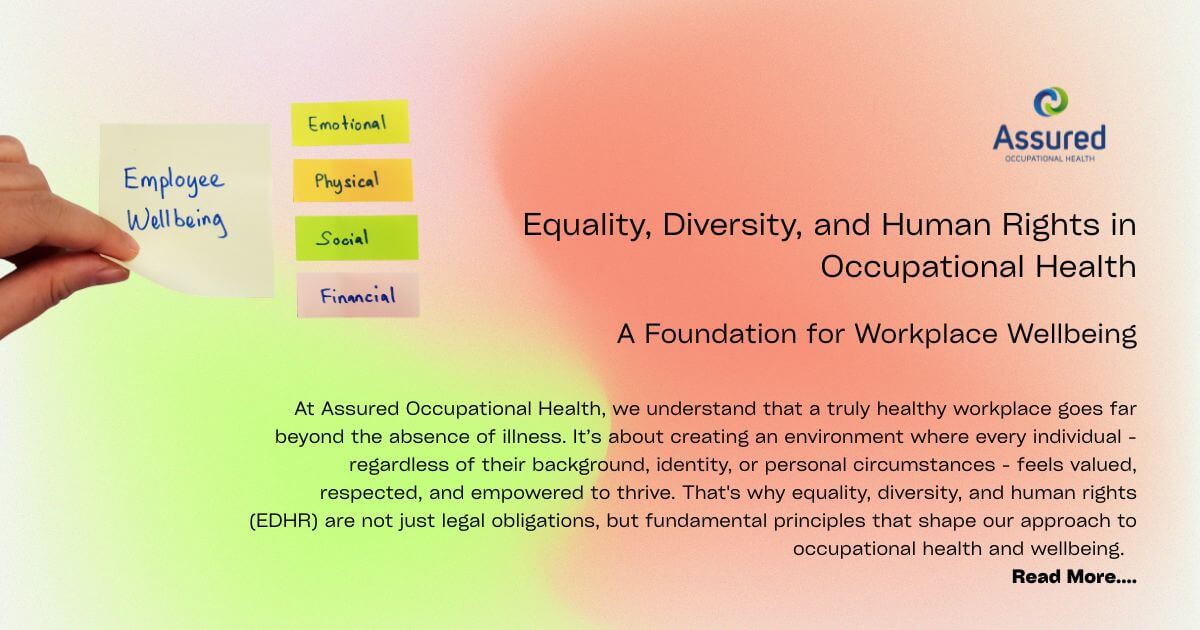
At Assured Occupational Health, we understand that a truly healthy workplace goes far beyond the absence of illness. It’s about creating an environment where every individual – regardless of their background, identity, or personal circumstances – feels valued, respected, and empowered to thrive. That’s why equality, diversity, and human rights (EDHR) are not just legal obligations, but fundamental principles that shape our approach to occupational health and wellbeing.
Why EDHR Matters in Occupational Health
Occupational health is all about supporting employees to stay well at work – physically, mentally, and emotionally. But wellbeing is intrinsically linked to how individuals experience the workplace. Are they treated fairly? Do they feel safe to be themselves? Are their needs understood and accommodated?
Equality ensures that everyone has access to the same opportunities and resources, regardless of characteristics such as age, gender, race, disability, sexual orientation, religion, or socio-economic status.
Diversity recognises and celebrates our differences. A diverse workforce brings a wide range of perspectives and strengths, fostering innovation and resilience in organisations.
Human rights underpin dignity, respect, and fairness in every workplace interaction. They include the right to privacy, freedom of expression, and protection from discrimination or degrading treatment.
When these values are integrated into workplace policies and practices, businesses see tangible benefits: reduced absenteeism, higher employee engagement, improved morale, and better retention rates.
The Role of Occupational Health Providers
As occupational health professionals, we play a unique role in promoting EDHR. At Assured Occupational Health, we’re committed to ensuring that our services are accessible and inclusive for all employees. This includes:
- Providing equitable health assessments that consider the specific needs of each individual, including reasonable adjustments for disabilities or health conditions.
- Advising employers on how to create supportive environments for diverse groups, such as neurodivergent individuals, menopausal employees, or workers managing chronic conditions.
- Offering culturally sensitive mental health support that respects individual backgrounds, beliefs, and experiences.
- Ensuring confidentiality and informed consent, in line with data protection laws and ethical standards.
We see ourselves as partners in building fairer, healthier workplaces – ones where nobody is left behind due to outdated assumptions or unconscious bias.
Legislation and Standards in the UK
In the UK, the Equality Act 2010 provides a clear framework for promoting fairness in employment. It protects individuals from discrimination on the basis of Nine Protected Characteristics and places a duty on employers to make reasonable adjustments for disabled employees.
The Human Rights Act 1998 also protects fundamental Freedoms in the Workplace, such as the right to dignity and respect. These aren’t just abstract legal concepts – they have real implications for how employers manage health-related issues, from sickness absence to mental health disclosures.
Meanwhile, initiatives such as the Health and Safety Executive’s (HSE) Management Standards for Work-Related Stress encourage organisations to identify and manage risks that disproportionately affect certain groups.
At Assured Occupational Health, we help employers navigate these obligations with practical, evidence-based advice that aligns with legal and ethical standards.
Championing Inclusion in the North-East of Scotland
Aberdeen is a diverse and dynamic city, with a growing workforce that reflects a wide range of nationalities, cultures, and experiences. From the energy sector to healthcare and education, employers are recognising the need for inclusive practices that support everyone – whether they’re long-time residents or recent arrivals.
We’re proud to support organisations across the North-East of Scotland in creating inclusive health and wellbeing strategies. This includes:
- Supporting inclusive return-to-work processes
- Designing health surveillance programs that consider gender-specific risks (e.g., for reproductive health)
- Training managers to recognise and support mental health issues without stigma
- Providing translation or interpretation services when needed
Practical Steps for Employers
Embedding EDHR into workplace wellbeing isn’t a one off task – it’s an ongoing commitment. Here are a few steps employers can take:
- Audit your health and wellbeing policies to ensure they reflect the needs of all employees.
- Provide EDHR training for managers and HR teams.
- Encourage employee feedback to identify gaps or barriers to access.
- Partner with occupational health providers who understand and champion inclusive practices.
Final Thoughts
At Assured Occupational Health, we believe that a truly healthy workplace is one where everyone has the opportunity to succeed and feel safe doing so. Promoting equality, embracing diversity, and respecting human rights isn’t just good practice – it’s essential for the long-term health of employees and organisations alike.
Whether you’re a small business or a large enterprise, we’re here to support your journey toward inclusive occupational health.
Contact us today to find out how we can help your organisation put equality, diversity, and human rights at the heart of workplace wellbeing.
T. 01224 056002 | E. admin@assuredoh.co.uk

Leave a Reply
Want to join the discussion?Feel free to contribute!